
Top Signs You Need Air Duct Cleaning Service – Don’t Ignore These
Visible dust on a vent grille is one of the least urgent signs your ducts need attention. The indicators most homeowners overlook – uneven airflow between rooms, allergy symptoms that flare only at home, or a sweet chemical smell when the system kicks on – point to conditions deeper inside the system that a visual check won’t catch. Here’s how to sort the cosmetic signals from the ones that mean active contamination. If you’d rather not investigate on your own, call (855) 552-7560 for a free estimate.
Why “Dusty Vents” Is the Wrong Place to Start
A gray film on the grille tells you almost nothing. That dust settled on the surface, and it’s the same dust you’d find on a bookshelf after a week. What matters is what’s happening inside the branch runs, the main trunk, and the air handler – the parts you can’t see from the hallway.
In Upper West Side apartments, we’ve learned to think of duct condition as a diagnostic question rather than a cleaning schedule. Surface buildup is a housekeeping issue. Active contamination – mold colonization, pest debris, construction particulate pulled into return ducts – is a different problem requiring a different response. The signs below are grouped by which category they point toward.
Two Buckets, One Decision
- Surface signals: visible dust, mild odor, general “it’s been a while” feeling. Clean when convenient.
- System signals: pressure asymmetry, symptom patterns tied to HVAC operation, chemical or musty smells at startup, pest evidence. Investigate now.
The rest of this piece walks through the system signals, because those are the ones that get ignored.
Pressure and Airflow Asymmetry Between Rooms
When one room in the same apartment consistently receives less airflow than the others, the thermostat is rarely the culprit. The more likely explanations are a blockage in a branch run, a collapsed section of flex duct, or heavy debris accumulation in a single leg of the system. Same system, same blower – unequal delivery means something is obstructing the path.
You can test this without tools. On a still day, hold a tissue or a piece of light paper in front of each supply register. If three vents pull it taut and one barely moves it, you have a branch-run problem. In our experience running air duct cleaning calls across Upper West Side prewar buildings, this pattern is one of the most common things a homeowner has simply learned to live with.
What Causes Uneven Flow
- Collapsed or kinked flex duct from an old retrofit
- Debris buildup narrowing one branch
- Disconnected or poorly sealed duct joints leaking air before it reaches the room
- A closed damper someone forgot to reopen
An airflow test and a camera inspection can separate these causes quickly. Cleaning without finding the cause is guesswork.
The “Healthy Outside, Sick at Home” Pattern
If allergy or asthma symptoms ease when you leave the apartment and worsen within an hour of coming back – especially when the HVAC is running – the system is likely distributing a contaminant rather than just moving air. This pattern is one of the strongest indicators we look for. It suggests the source is inside the ductwork and being actively recirculated into every room the system serves.
Note the timing. Symptoms that track with HVAC operation are a system signal. Symptoms that come and go regardless of whether the system is on are more likely environmental and unrelated to the ducts.
What to Track for a Week
- Log when symptoms flare and whether the system was running.
- Note whether improvement happens outdoors or in other buildings.
- Check whether a particular room is worse than others.
- Look for recent triggers: new pet, renovation, seasonal pollen, or a filter change.
A one-week log is remarkable diagnostic information, and it costs nothing. If the pattern holds, that’s your green light to schedule an inspection.
What a Musty Smell Actually Means
A mild odor that fades once the system runs is usually dust accumulation – a surface signal. A persistent musty smell that strengthens at first system startup after weeks of disuse is a different category. That pattern often signals mold colonization in the duct liner or the condensate drain pan, where moisture has been sitting and biological growth has taken hold.
Why it strengthens at startup: the blower pushes air across a colonized surface, releasing spores and volatile compounds into the supply airstream all at once. After a few minutes, dilution makes it seem to fade, but the source is still there.
Smells That Are Not Duct Problems
- Sweet, chemical smell: often refrigerant or electrical – call an HVAC technician, do not run the system.
- Rotten egg smell: possible gas – evacuate and call your utility.
- Burning smell: electrical or motor issue.
Musty and moldy are the two words that most often justify a duct-side inspection. Everything else belongs to a different trade.
Recent Renovation: An Automatic Trigger
Any apartment undergoing a gut renovation should have its ducts cleaned afterward – full stop. Drywall dust, adhesive vapors, and insulation fibers get pulled into return ducts during construction, and once inside, they don’t leave on their own. They get recirculated every time the system runs. The particulate is invisible once it settles on the duct walls, which is exactly why it gets forgotten.
This is especially true in Upper West Side apartments with original duct runs, where the return path may already be oversized or poorly sealed. New drywall dust layered onto years of existing debris makes the system harder to clean later.
Post-Renovation Cleaning Scope
- Full contact cleaning of supply and return runs
- Air handler and coil inspection
- Sealing any joints opened during construction
- Filter replacement with the correct MERV rating for your system
A surface vacuum of the grilles does nothing for this. It has to be a full-system clean with professional-grade extraction equipment.
Pest Evidence in or Near Vents
Droppings, nesting material, or scratching sounds inside a duct run are not just a pest control problem. The ductwork carries biological debris from the infestation site to every room the system serves. This is one of the clearest cases of active contamination, and it requires cleaning plus sealing of entry points – not just a trap and a spray.
Ask any pest control technician: the traps remove the animal, but the contamination stays. Ductwork that has carried rodent or insect debris needs professional cleaning and, critically, a search for the entry point that allowed the problem in the first place.
When to Call a Pro
If any of these apply, it’s worth bringing in a specialist who can inspect and treat the full air pathway rather than just the visible vents:
- Uneven airflow you can measure with a tissue test
- Symptoms that track with HVAC operation
- Persistent musty smell at startup
- Recent renovation with no post-work cleaning
- Visible pest evidence
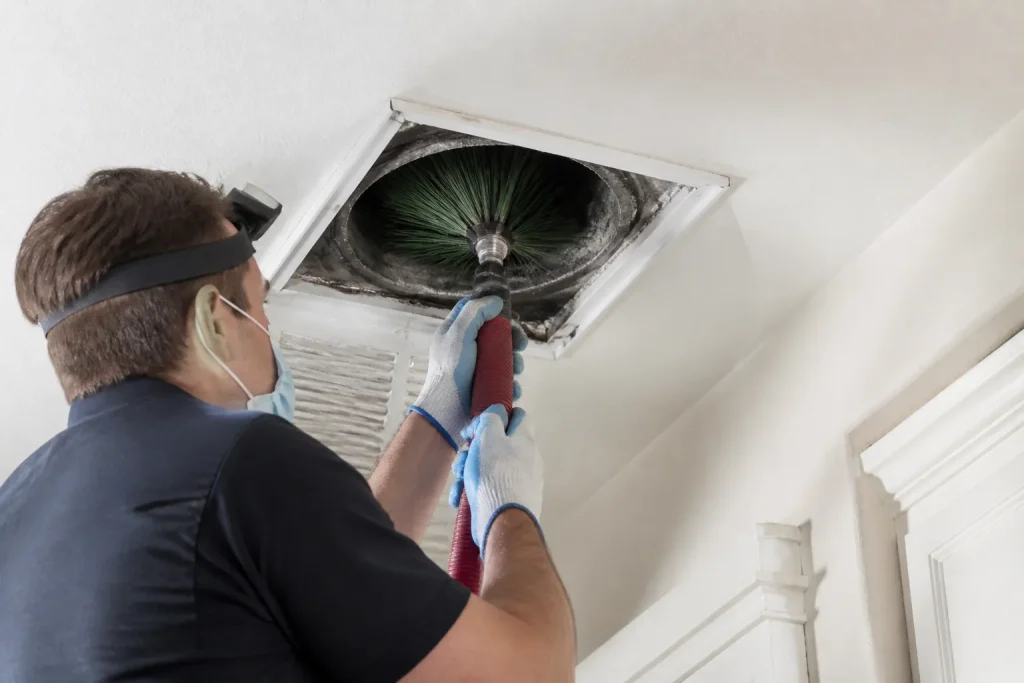
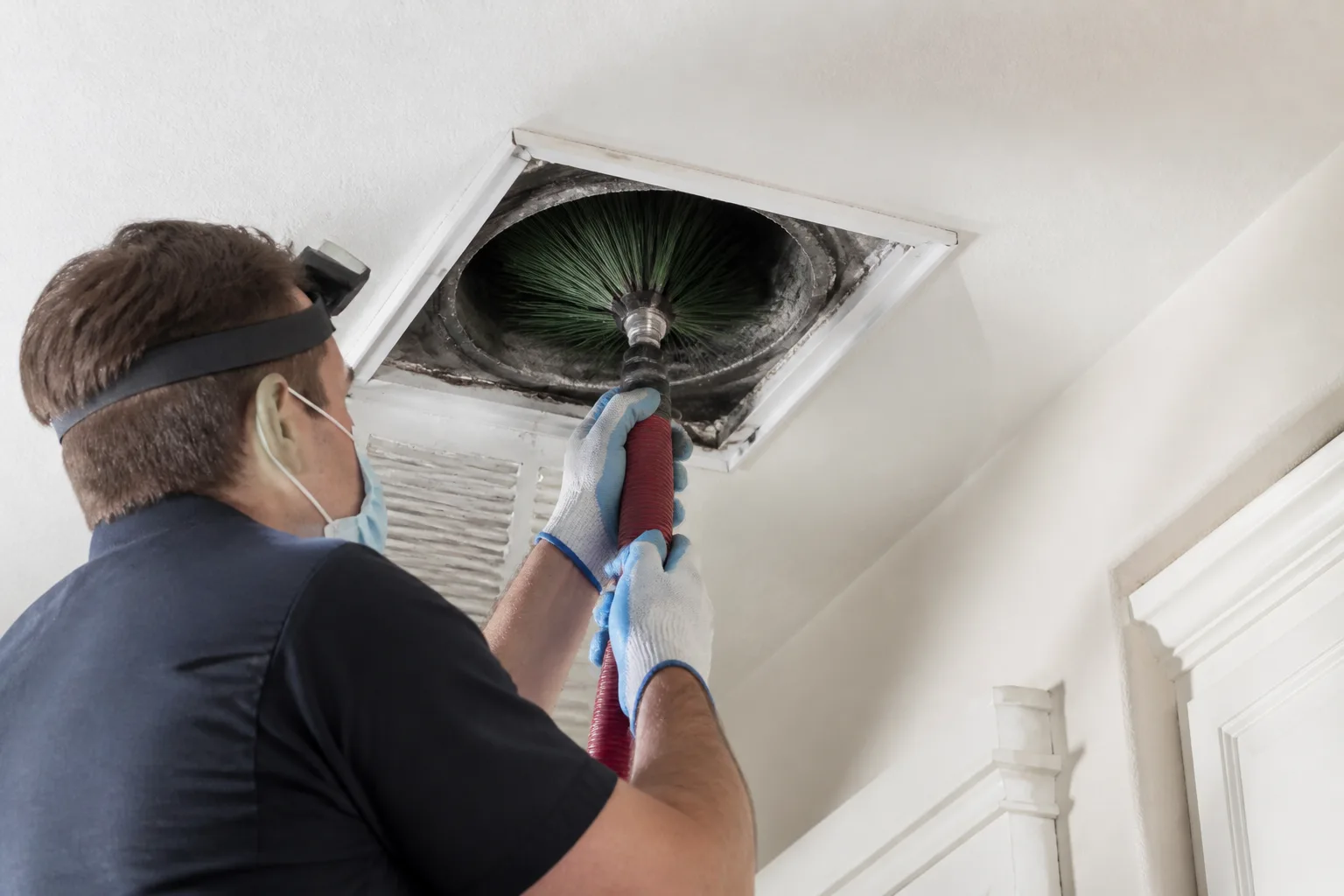
Homeowners don’t need to fix these themselves, and shouldn’t try. The work involves high-volume extraction, negative-air containment, and, in the case of HVAC cleaning, disassembly and reassembly of system components. Our technicians have up to 9 years of experience and use Rotobrush contact-cleaning systems and Nikro commercial vacuum equipment – the same class of tools used by HVAC contractors for this specific job.
We also handle dryer vent cleaning as a standalone safety service, since a clogged dryer vent is one of the leading causes of residential fires and often goes overlooked by duct-only providers. And when we’re cleaning, we look for gaps: sealed and clean beats clean-only every time, because cleaning without sealing leaves the same entry points open for the next round.
For sanitizing, we use Abatement Technologies air scrubbers and negative-air equipment – the same filtration class used in mold and disaster remediation – so the sanitizing step actually does something beyond a deodorizer spray. If your apartment has a Honeywell or Aprilaire air quality system, we’re trained on those too and can work with the equipment you already own.
Related services in Upper West Side
If you’ve read this far and the airflow-pattern or post-renovation sections are ringing a bell, the fastest answer is an inspection. We start at the full air pathway – Air Duct Cleaning Upper West Side gives you the overview of how that goes.
What happens when you call
- 1
A real person answersNo phone trees – you reach a local pro.
- 2
You get an upfront price rangeHonest numbers before anyone is dispatched.
- 3
A background-checked tech heads outLicensed & insured, dispatched right away.
- 4
You approve before work beginsNothing starts until you say go.
The Bottom Line
Three takeaways worth carrying out of this piece:
- Dusty grilles are the least urgent sign. The system signals – pressure asymmetry, symptom patterns, musty smell at startup, renovation aftermath, pest evidence – are the ones to act on.
- Cleaning without diagnosing is guesswork. The cause of uneven airflow or a recurring smell has to be found and fixed, not just vacuumed around.
- Seal as well as clean. Duct repair and sealing close the entry points that let contamination back in.
If you’re in Upper West Side and need help, Air Duct Cleaning Upper West Side offers free estimates – call (855) 552-7560. We answer 24/7. Fast dispatch from 7am to 7pm, Sunday through Friday. One flat price per system is agreed before work starts, and we share before-and-after photos of your own ducts so you can see what came out. The local professional we connect you with is licensed and insured as their state requires, and every job is backed by a satisfaction guarantee.
Frequently Asked Questions
Most homes can go several years between cleanings, but the schedule depends on the individual system. Pets, recent renovation, smokers, and old HVAC equipment all shorten the interval. Apartments with pets and prewar ductwork often benefit from more frequent checks. The honest answer is: base the schedule on the diagnostic signs, not a calendar. Call (855) 552-7560 for a free estimate – we’ll tell you what your system actually needs.
You can spot the surface signals – visible dust, mild odor – but the system signals like collapsed flex duct or pressure asymmetry need tools and eyes inside the duct. A tissue test is a reasonable first check for airflow asymmetry. If any pattern you notice matches what’s in this article, an inspection is the next step. Call (855) 552-7560 – estimates are free.
It can reduce one source of indoor particulate – the debris and biological material recirculated by the HVAC system – but it doesn’t guarantee medical results. What we bring is professional extraction with equipment like Rotobrush contact-cleaning systems and Nikro commercial vacuums, plus Abatement Technologies air scrubbing for the sanitizing step. If the ductwork is a contributing source, cleaning will reduce it. If it isn’t, we’ll say so. Call (855) 552-7560 to schedule an inspection.
Dryer vent cleaning is offered as a standalone service, and it’s worth doing for safety regardless of duct condition. A clogged dryer vent is one of the leading causes of residential fires. Call (855) 552-7560 for a free estimate on that job alone.
Written by the team at Air Duct Cleaning Upper West Side.
Need Air Duct Cleaning Help?
Call Air Duct Cleaning Upper West Side - the local pro we connect you with is licensed and insured, with free written estimates in Upper West Side.
(855) 552-7560